
Recently, we were customizing a SharePoint intranet portal for an organization. While designing the home page of their SharePoint site, we considered adding a Planner web part to display tasks from the Planner app.
The client was already using Planner to manage their task, so why not display those tasks on the SharePoint intranet home page?
In this tutorial, I will show you how to work with a SharePoint planner web part with some examples.
What Is Microsoft Planner
Before understanding the web part, let me help you know what Microsoft Planner is:
- Planner is a task management tool in Microsoft 365
- It helps teams organize work using:
- Plans (projects)
- Buckets (categories like “To Do”, “In Progress”, “Done”)
- Tasks (individual pieces of work)
- Tasks can have:
- Due dates
- Assigned users
- Checklists
- Attachments
Planner is often used for team projects and lightweight task tracking.
What Is the SharePoint Planner Web Part?
The SharePoint Planner web part lets you show a Microsoft Planner plan directly on a SharePoint page. Instead of switching between apps, users can see and manage tasks right where they work—in SharePoint.
Think of it as a bridge between SharePoint (team collaboration) and Planner (task management).
The Planner web part allows you to:
- Display an existing Planner plan
- Let users view and update tasks without leaving SharePoint
- Keep project tasks visible alongside documents, news, and links
In simple terms:
It brings your Planner board into a SharePoint page.
You can add the Planner web part to:
- Modern SharePoint pages
- Team sites
- Communication sites
It works best on team sites connected to a Microsoft 365 Group, since Planner also uses groups.
Check out Attach Files to Planner Tasks Using Power Automate
Create a Plan in a SharePoint Online Site
First, let me show you how to create a plan from the SharePoint Online site itself. This will be helpful if you do not have a plan in the Planner App.
Follow the instructions below:
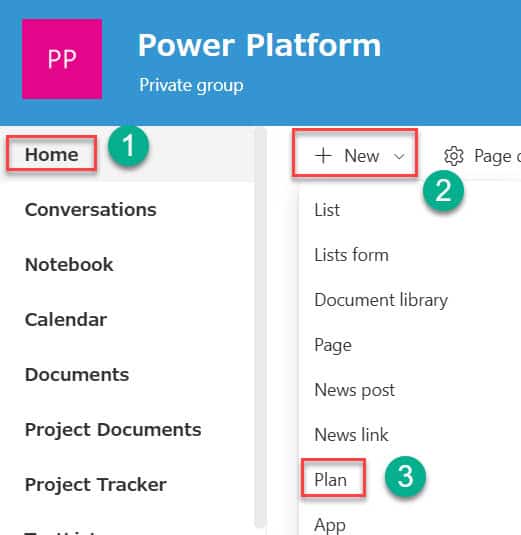
- Open the SharePoint site home page, then select +New, then click Plan.
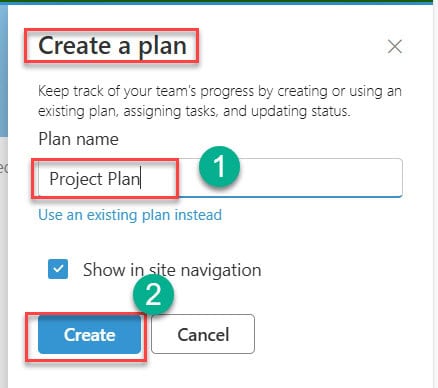
- Then, in the properties pane, enter the name under Plan name, and click Create.
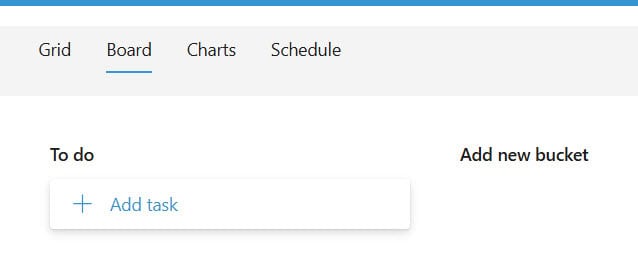
- Once you click on Create, the Plan is created in SharePoint Online as shown in the screenshot below.
In this way, we can create a plan in a SharePoint Online site.
Check out Microsoft Forms Web Part in SharePoint Online
Display a Plan in a SharePoint Planner Web Part
Now, let me show you how to display the plan that we have created above in a SharePoint Planner web part.
Follow the instructions below:
- Open the SharePoint Online Site, click on Edit at the top right of the page. Then click on the +circled icon and choose a column.
- Then click on the + circled icon. Then the Search box will appear, and you can search for Planner. Then you will find the Planner web part as shown in the screenshot. Then click on the Planner web part.

- As we have already created a Plan in the SharePoint Online site. By default, we can see the SharePoint Online Planner web part with the existing plan, as shown in the screenshot below. If we want, we can also add a new plan by clicking on +Add a new Plan. By default, the plan is displayed in the Board view.

In this way, we can add the SharePoint Online Planner web part and display a plan.
Read SharePoint Quick Links Web Part
Configure Planner Web Part in SharePoint Online
Once we have added the web part, we can also configure it by giving the bucket names and adding tasks. Here are the steps to configure the Planner web part.
- Open the SharePoint Online Planner web part. Here, we can change the bucket names as we like by clicking the bucket. We can also add new buckets by clicking on Add new bucket.
- To add tasks, click +Add task. Then enter the task name, set the due date, and assign it to the team member. Then click on Add task.

- Once you click Add task. Then you can see the task as shown in the screenshot below.

- Then you can also edit this task. For that, click on the task name, and then you will get a dialog box. There, you can edit the task name, assign a person, label, bucket, progress, priority, start date, due date, and repeat. You can also add notes and add sub-tasks by clicking Add an item. Then you can also attach the attachments.
- If you want to send an email to the assigned persons about the task details, write the comments and click on Send.

In this way, you can add tasks and edit them. Here, I have added some more tasks in the same way.
Check out Events Web Part in SharePoint Online
SharePoint Online Planner Web Part Display Options
We can display the SharePoint Planner web part in different views. For that, please follow the steps.
- Edit the SharePoint Online Planner web part. In the Properties pane, under Display, you can choose one of them. Here are different display options. They are
- Board
- Charts
- Status Chart
- Member Chart
- Priority Chart
- By default, the Planner web part will be in the Board as shown in the screenshot below.

- If we select Charts(all), then the Planner web part will display as shown in the screenshot below.

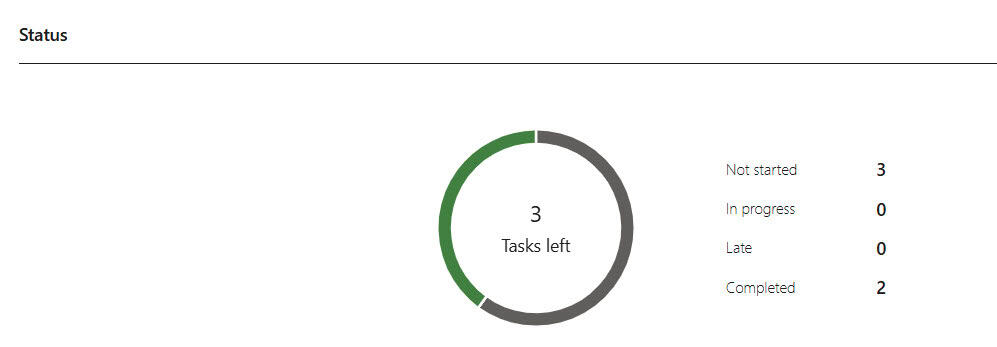
- If you select the Status chart, then you can see the Planner web part as shown in the screenshot.
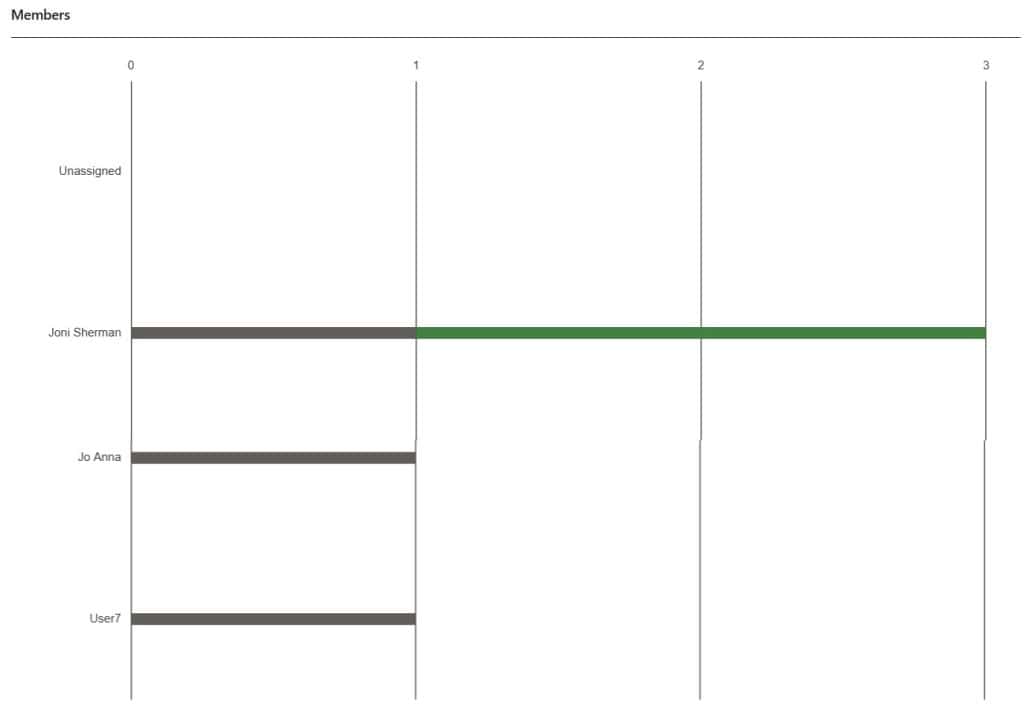
- If you select Members Chart, then your Planner web part will display as shown in the screenshot.
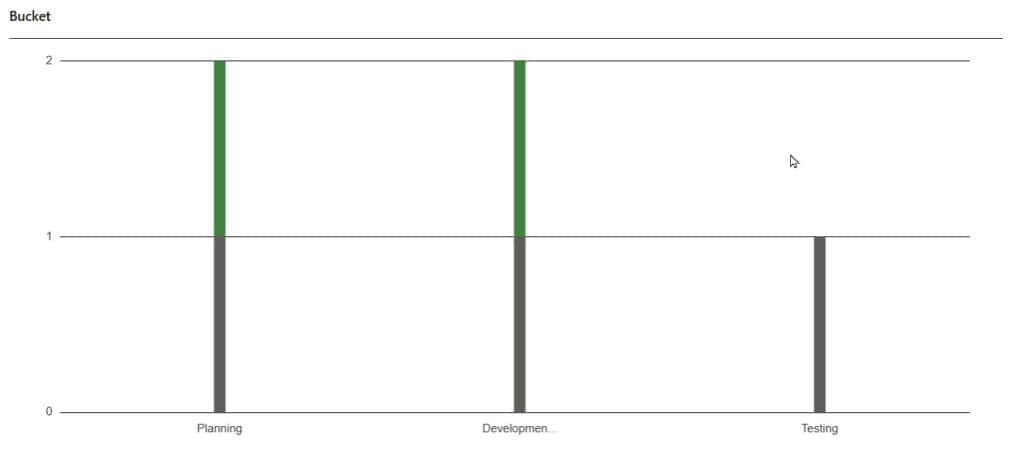
- If you select Bucket Chart, then your Planner web part will display as shown in the screenshot.
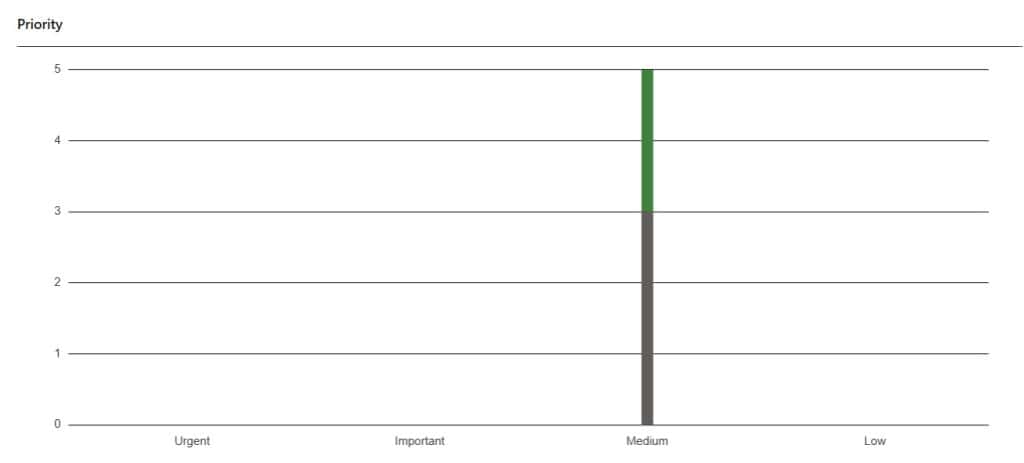
- If you select Priority Chart, then your Planner web part will display as shown in the screenshot.
Conclusion
The SharePoint Online planner web part helps teams to easily view and manage their tasks directly on the SharePoint site. It keeps work organized in one place so that teams can stay focused and complete tasks on time.
In this tutorial, I explained how to use the SharePoint planner web part with an example.
You may also like the following tutorials:
- Create an Organization Chart in SharePoint Online
- People Web Part in SharePoint Online
- SharePoint Online Hero Web Part

After working for more than 18 years in Microsoft technologies like SharePoint, Microsoft 365, and Power Platform (Power Apps, Power Automate, and Power BI), I thought will share my SharePoint expertise knowledge with the world. Our audiences are from the United States, Canada, the United Kingdom, Australia, New Zealand, etc. For my expertise knowledge and SharePoint tutorials, Microsoft has been awarded a Microsoft SharePoint MVP (12 times). I have also worked in companies like HP, TCS, KPIT, etc.


since planner is not available in private channels, I also don’t see it under webparts in private page in SPO