
When building an intranet in SharePoint Online, one of the biggest challenges is helping users quickly find the links they rely on every day—like submitting expenses, checking the holiday calendar, or accessing internal tools. If these links aren’t visible the moment someone lands on the homepage, they assume they’re missing.
That’s exactly where the SharePoint Online Quick Links Web Part is used for. It lets you display your most important links as clear, visually appealing buttons right on the page, improving navigation and reducing user confusion.
In this tutorial, I will show you how to use the quick links web part in SharePoint, how it works, and how to configure it effectively.
Quicks Links Web Part in SharePoint Online
The Quick Links web part in SharePoint Online is one of the most commonly used components for building modern pages. It allows you to “pin” items to your page for easy access, serving as a navigation hub for documents, external websites, other SharePoint pages, or specific list items.
Unlike a standard text link, Quick Links focuses on visual navigation, allowing you to use icons, custom images, and descriptions to make resources stand out.
Add SharePoint Online Quick Links Web Part
Here, let us see how to add the Quick Links web part to SharePoint Online. To add the Quick Links web part, please follow the instructions below.
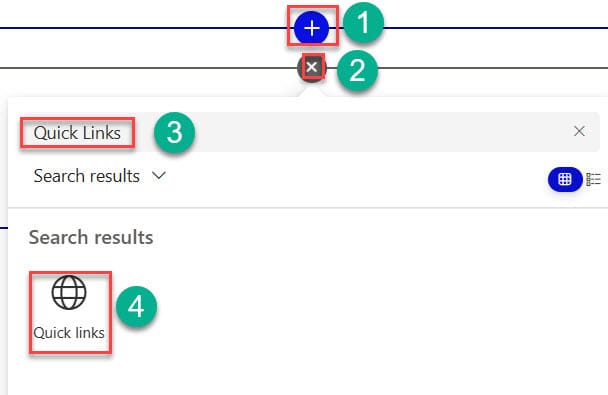
Open the SharePoint site where you want to add the Quick Links web part, and click Edit at the top of the page. Click the + icon to choose a section, then click the + icon within that section to add a web part. When the search box appears, type “Quick Links,” and select the Quick Links web part to add it to the page.
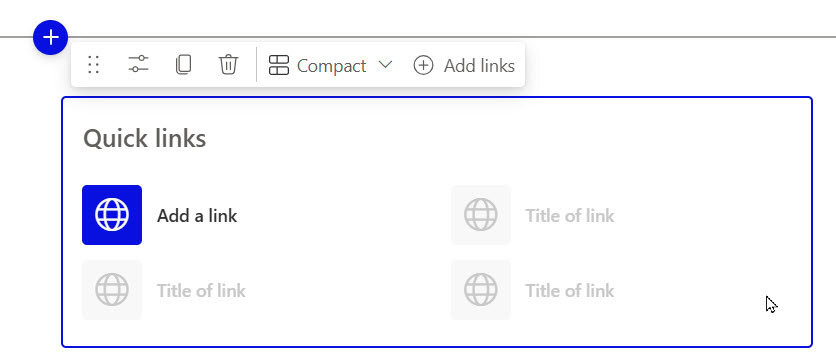
After this web part is added, this is how the web part looks:
When you add a link, SharePoint attempts to be smart about it.
- Sources: You can link from a Link, a recently used file, a site page, files from your OneDrive, Stock images, or upload a specific document.
- Auto-Populating: If you link to a Word document or a specific web page, SharePoint will often automatically grab the file name as the “Title” and generate a thumbnail preview or identify the file type icon for you.
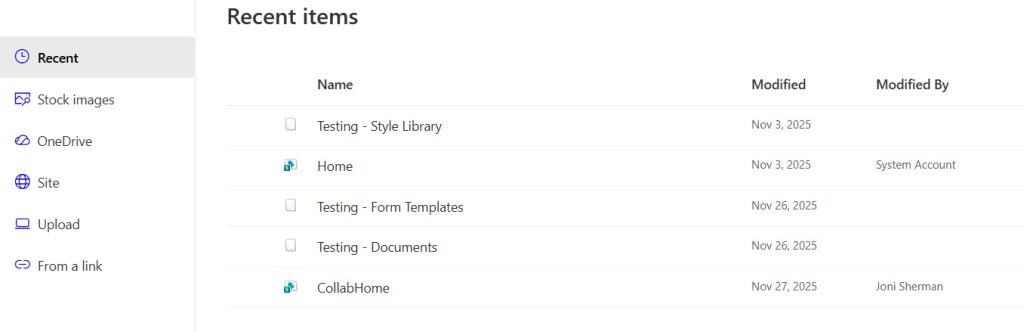
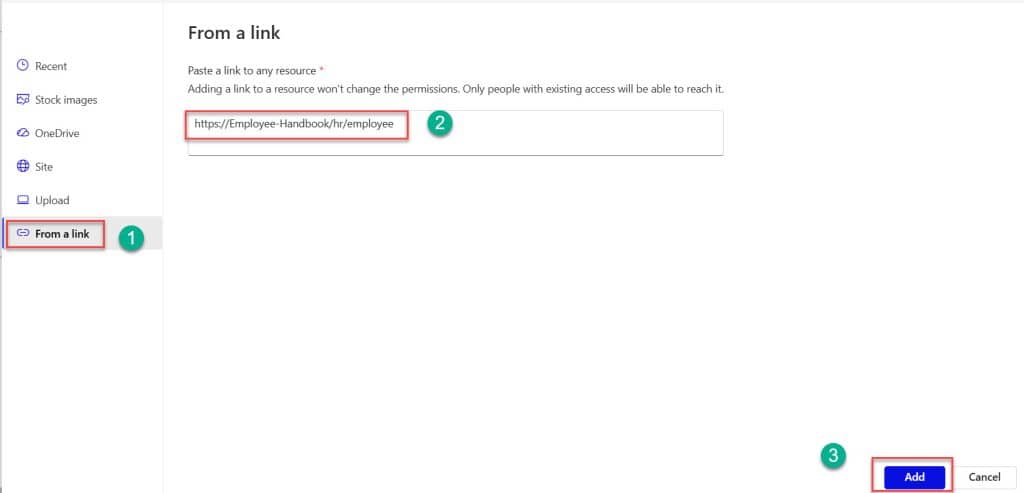
Here, I selected “From a link”, then pasted the URL and clicked on Add.
After adding a link to the Quick Links web part, it appears as shown in the screenshot below. Here, I set the title of the web part to Employee Self Service.
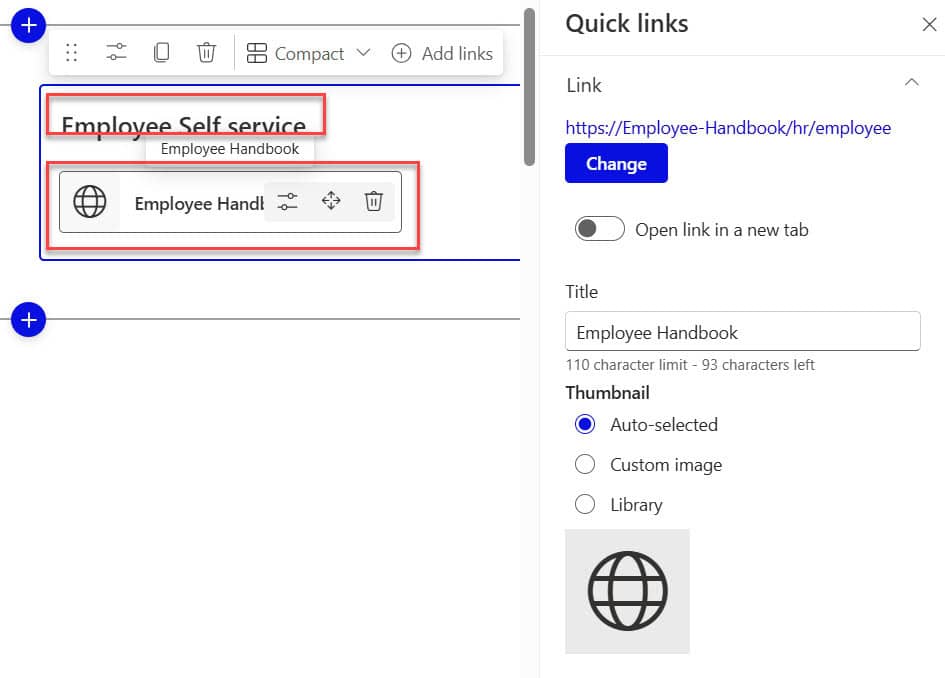
After adding, we can also edit this Quick link in the Quick Links web part.
Check out SharePoint Highlighted Content Web Part
Edit SharePoint Quick Link in Quick Link Web Part
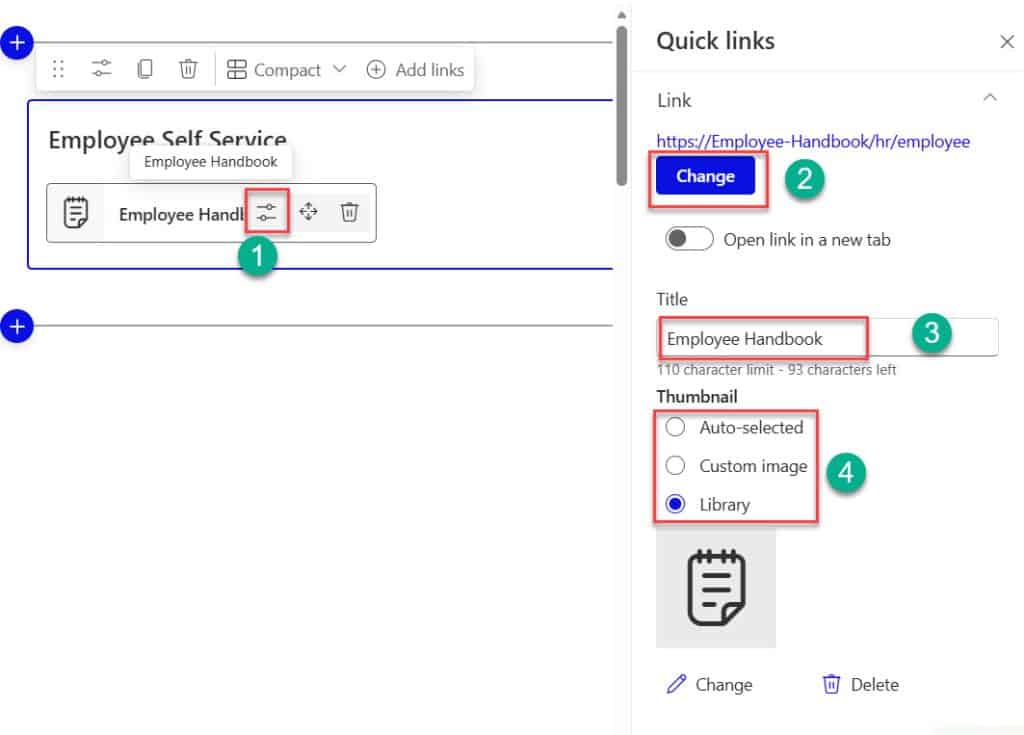
Here, we can also change the title, thumbnail, and Quick Links link in the Quick Links web part. Please follow the steps below.
- Open the Quick Links web part for editing: Edit the page, then click the Edit icon on the specific Quick Links item you want to modify. In the Properties pane, use the Change option under Link to update the URL and edit the title as needed.
- Choose how the thumbnail is selected: You can pick from three thumbnail options: Auto-selected, Custom image, or Library. By default, the web part uses Auto-selected.
- Update the thumbnail image
- If you choose Custom image, click Change below the thumbnail, browse for an image in the dialog box, and select it.
- If you choose Library, an icon dialog box will open; select an image and click Insert.
- Save your updates: After completing all changes, click Republish to apply and save your modifications.
Here, I changed the thumbnail and selected the image from the library. You can see the image has changed in the quick link.
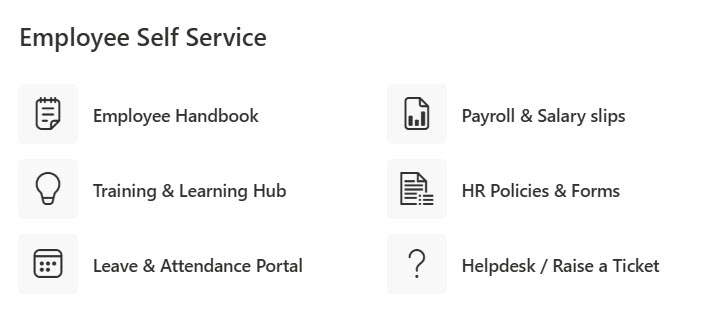
In this way, I added a few more links to the web part. The Quick Links web part is then displayed as shown in the screenshot below.
Read Events Web Part in SharePoint Online
Layouts In SharePoint Online Quick Links Web Part
The defining feature of this web part is its ability to completely change appearance without altering the underlying data (the links). There are six distinct layouts Microsoft provides as of now:
- Compact: Small icons with text. Best for high-density lists where space is tight.
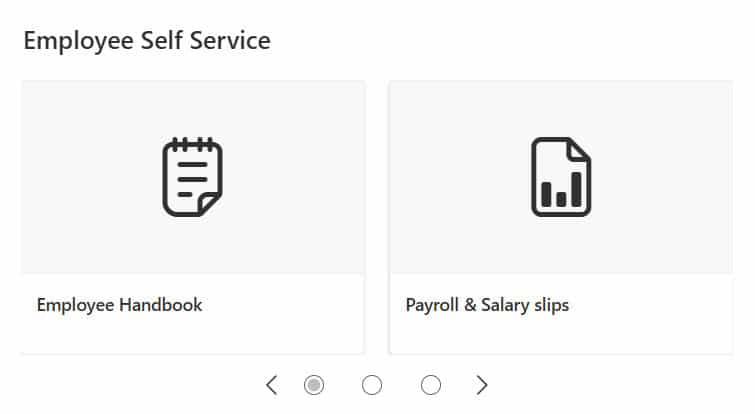
- Filmstrip: A horizontal scrolling carousel. Best for displaying images or videos where you want to save vertical page space.
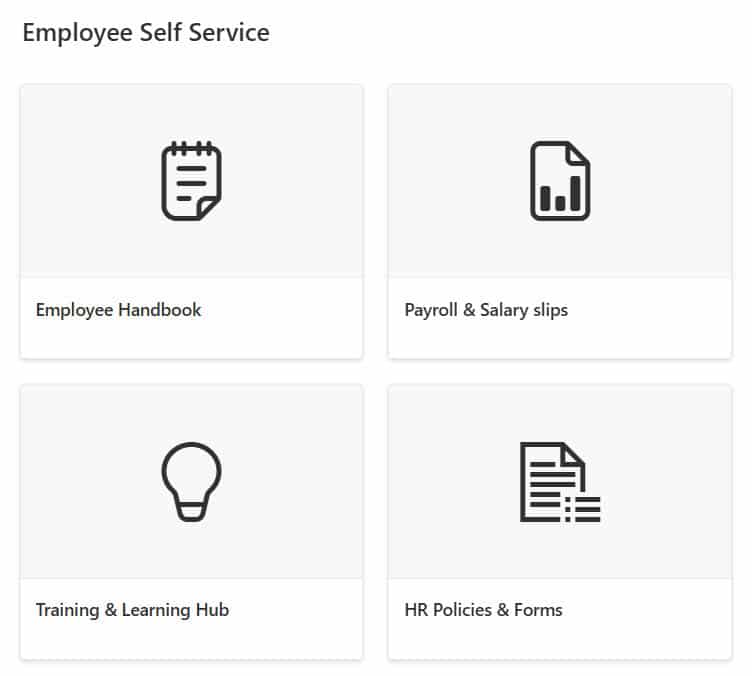
- Grid: Large squares with icons/images. Great for touch-friendly interfaces or visual categories.
- Button: Looks like standard UI buttons (outlined or filled). Good for “Call to Action” links (e.g., “Submit Expense Report”). This is the layout mostly used by professionals.
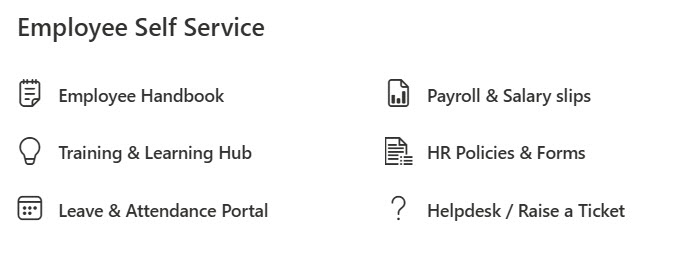
- List: A simple vertical list with small icons. Best for long lists of operational documents.
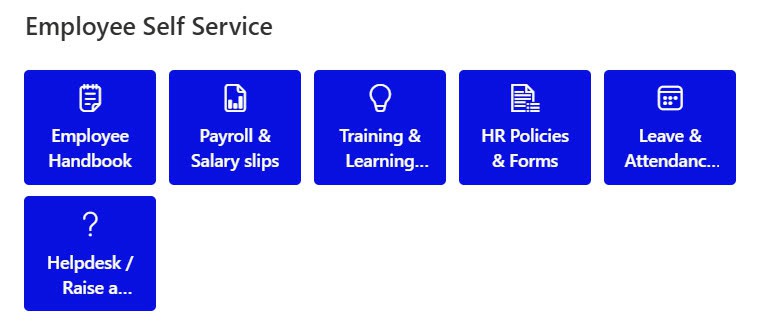
- Tiles: Similar to Grid but smaller and specifically designed to mimic the Windows “Metro” tile look.
Here, I will show how to change the layout of the Quick Links web part. So, please follow the instructions below.
- Edit the Quick Links web part. In the right-side properties pane, click Layouts Option. And choose the layout as per your choice. By default, the Compact layout is available in the Quick Links web part. Then your layout is as shown in the screenshot below.
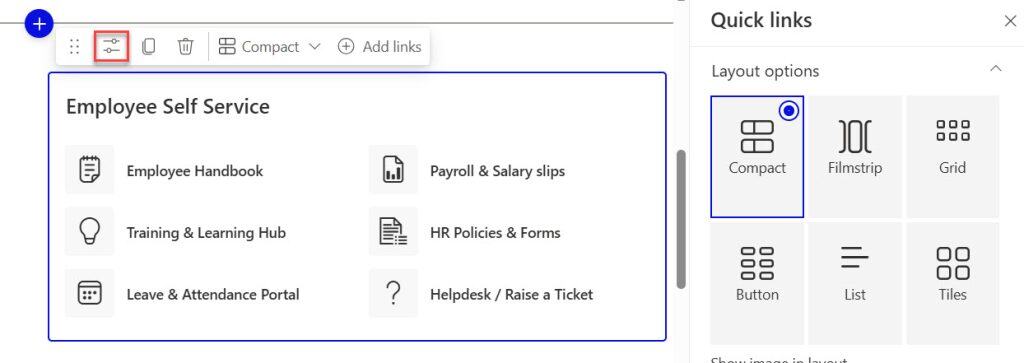
- If you select Filmstrip, then you can see the Quick Links web part as shown in the screenshot below.
- If you select Grid, then your Quick Links web part is displayed as seen in the screenshot below.
- If you select the List, then your layout is displayed as shown in the screenshot below.
- If you select Tiles, you will see different icon size options: Small, Medium, Large, Extra Large, and Fill Space. You can choose as you like. By default, Medium is selected, so the layout looks as shown in the screenshot below.
- Using the button layout, we can design some attractive quick links. Here you can see that I have added six links and selected the Fill color option from the Button Appearance to set a background color. Same, you can show the icons on the left, top, or even remove the icon from the Icons option.

Check out SharePoint Online Hero Web Part
Implement Audience Targeting in the Quick Links Web Part
You can enable Audience Targeting within the quick links web part settings.
- How it works: You can assign specific links to specific Microsoft 365 Groups or Security Groups.
- The Result: If you have a link to “Sales KPIs,” you can target it so only the Sales team sees that specific button. Everyone else sees the rest of the links, but that specific one remains hidden from them.
Follow the steps below to enable audience targeting in the Quick Links web part links.
- Edit the Quick Links web part. Then, in the properties pane below “Enable audience targeting,” slide the toggle.
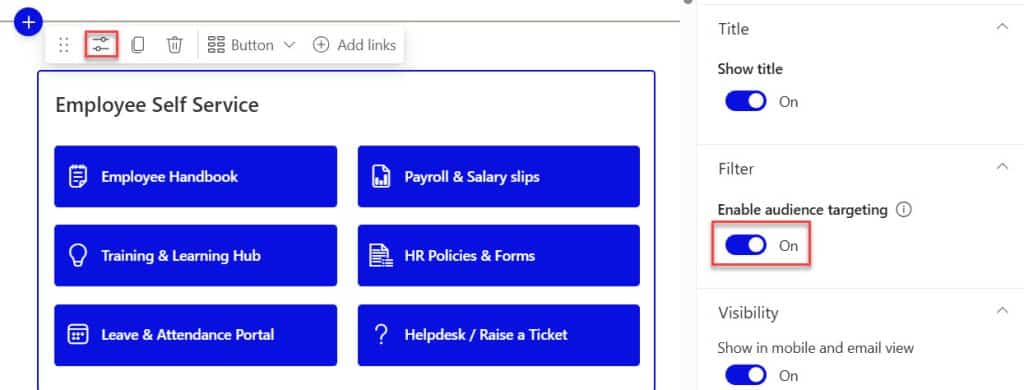
- Then click the link you want to enable audience targeting for, then click Edit. Then, on the properties panel, below the Audience to target, select the group(s). Here you can select up to 50 groups. Once selected, you can see the audience icon beside the link you enabled audience targeting.
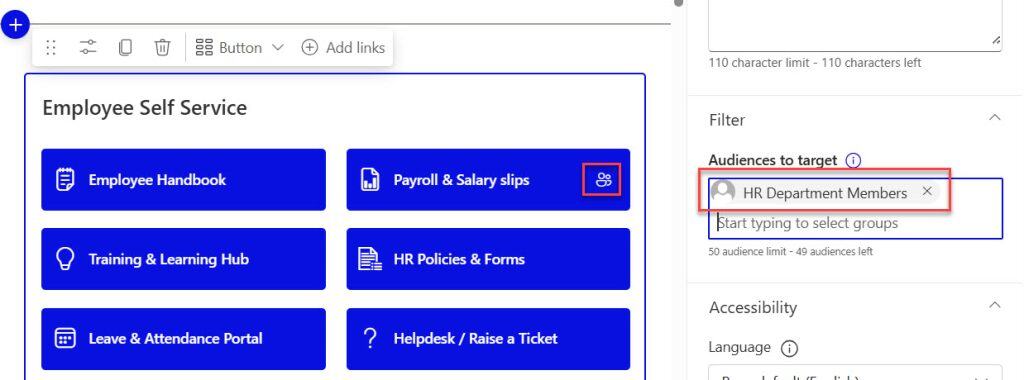
In this way, we can enable audience targeting in the Quick Links web part in SharePoint Online.
Conclusion
The SharePoint Online Quick Links web part is used in intranet home pages, especially to improve site navigation. You can use various layouts—from simple lists to visual grids—and, with advanced features like Audience Targeting, create a user experience that is both engaging and highly relevant.
You may also like:
- SharePoint Online Microsoft Forms Web part
- People Web Part in SharePoint Online
- SharePoint Online Planner Web Part

After working for more than 18 years in Microsoft technologies like SharePoint, Microsoft 365, and Power Platform (Power Apps, Power Automate, and Power BI), I thought will share my SharePoint expertise knowledge with the world. Our audiences are from the United States, Canada, the United Kingdom, Australia, New Zealand, etc. For my expertise knowledge and SharePoint tutorials, Microsoft has been awarded a Microsoft SharePoint MVP (12 times). I have also worked in companies like HP, TCS, KPIT, etc.


Sometimes we want to force users to have the quick links open in a new tab so they don’t lose the page they are working on. One workaround is to create a short link with Bitly or similar and use that instead. Microsoft will treat the short link as external and open the SharePoint page in a new tab.
Can you advise if the Quick Links webpart should appear in the SharePoint modern search results? Mine are not.