
When building a modern SharePoint Online intranet, the Text web part is one of the simplest ways to add formatted text, quick announcements, and rich content to a page. It supports headings, links, images, and tables so that site owners can share information clearly with their team.
In this tutorial, you will learn what the SharePoint Online Text web part is, how to add it to a modern page, and how to use its main formatting features step by step.
What is the Text Web Part in SharePoint Online?
The Text web part is a rich text editor that you can add to any modern SharePoint page or news post. It allows you to type and format content directly in the browser, similar to a lightweight Word or email editor.
You can use the Text web part to display announcements, instructions, FAQs, contact details, process steps, and other business information on your SharePoint site.
When to Use the Text Web Part
Use the SharePoint Text web part when you need:
- Simple announcements or updates on a team or communication site.
- Rich formatted content (headings, bullets, and links) without building custom web parts.
- Content that combines text with images or small tables in a single section on the page.
If you only need to show one image or video, dedicated Media web parts may be better, but for mixed content, the Text web part is usually more flexible.
How to Add a Text Web Part in SharePoint Online
Follow the steps below to add a Text web part to a modern SharePoint page.
- Edit the page
- Open the SharePoint Online page where you want to add content, and select Edit in the top-right corner of the page.
- Insert the Text web part
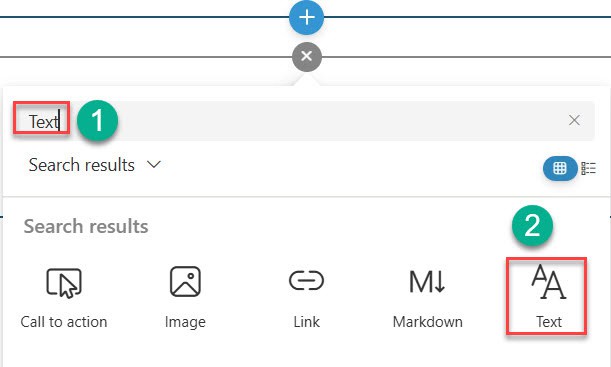
- Hover your mouse where you want to insert the content area, then select the + icon to add a new web part.
- In the web part picker, search for Text and click on the Text web part.
- Start typing content
- A rich text editor will appear where you can start typing your paragraph, heading, or announcement directly on the page.
Once you are done adding the web part, you can format the content using the Text toolbar.
Formatting Options in the Text Web Part
The SharePoint Online Text web part includes a rich set of formatting options to improve readability and structure. The main options are:
- Font formatting: Font style, font size, bold, italic, underline, font color, and highlight color.
- Paragraph formatting: Headings, alignment, bulleted list, numbered list, spacing, and paragraph options.
- Links: Insert or edit hyperlinks to SharePoint pages, external sites, documents, email addresses, and more.
- Quotes: Pull quote style to highlight important information.
- Insert elements: Insert images and 3×3 tables directly inside the text area.
These options help you organize content so users can quickly scan and understand the page’s information.
Using Headings and Paragraphs
Headings make your SharePoint page easier to scan and are important for accessibility and search engines.
- Use Heading 2 / Heading 3 to break your content into clear sections, such as “Overview”, “Steps”, or “Notes”.
- Keep paragraphs short and focused so that users on smaller screens can read them comfortably.
In the Text web part, you can select text and choose a heading level from the paragraph formatting options to structure your content.
Adding Bullet Points and Numbered Lists
Lists help show steps or grouped information.
- Use numbered lists for step‑by‑step procedures such as instructions or processes.
- Use bulleted lists for unordered items like key points, features, or prerequisites.
The Text toolbar provides buttons to quickly convert a line or paragraph into a bullet or numbered list.
Adding Hyperlinks in the Text Web Part
You can easily turn any piece of text into a clickable link.
- Select the text you want to use as the link.
- Click the Link (hyperlink) icon in the toolbar.
- Paste or type the URL of the SharePoint page, document, or external website.
- Choose whether to open the link in a new tab if required, and then apply the link.
Use clear link text (for example, “View leave policy” instead of “Click here”) to make the content more user-friendly.
Inserting Images in the Text Web Part
The Text web part also allows you to insert images inline with your text.
- Click inside the Text web part where you want to place the image, then choose the Insert image option from the toolbar.
- Select an image from SharePoint, OneDrive, or upload from your device, and adjust alignment if needed.
This is helpful when you want to show screenshots, icons, or small visuals to support the written instructions.
Adding Tables in the Text Web Part
Tables are useful for displaying structured information, such as mappings or simple comparisons.
- Use the Insert table option to add a 3×3 table into the Text web part.
- You can then type in each cell, adjust alignment, and use basic formatting options inside the table.
For more complex data reporting, you might still use a List or Library, but for small reference tables, the Text web part is often enough.
Example: Simple Announcement with Text Web Part
Here is a simple example of how a Text web part can be used on a team site home page:
- Add a heading like “Team Announcements” using a heading style.
- Type a short paragraph describing the update, and highlight key dates or actions in bold.
- Add a bullet list with key points or links to related pages or policies.
This makes it easy for team members to see what has changed when they open the site quickly.
Publish the Page
After you finish editing the Text web part and other web parts on the page:
- Click Republish or Publish at the top right of the page to make your changes visible to users.
- If you are not ready to show the content yet, you can Save as draft and come back later to continue editing.
Publishing ensures that everyone with access to the site can see the updated announcements and formatted content.
Conclusion
The SharePoint Online Text web part is a flexible tool for displaying text, images, and tables on modern pages without any custom development. By using headings, lists, links, images, and tables effectively, you can create clean, readable pages that communicate updates and information clearly to your users.
You may like the following tutorials:
- SharePoint Online Button Web Part
- SharePoint Image Gallery Web Part
- SharePoint Online Code Snippet Web Part

After working for more than 18 years in Microsoft technologies like SharePoint, Microsoft 365, and Power Platform (Power Apps, Power Automate, and Power BI), I thought will share my SharePoint expertise knowledge with the world. Our audiences are from the United States, Canada, the United Kingdom, Australia, New Zealand, etc. For my expertise knowledge and SharePoint tutorials, Microsoft has been awarded a Microsoft SharePoint MVP (12 times). I have also worked in companies like HP, TCS, KPIT, etc.

