
I was working with a client who had their SharePoint site URL as “https://<tenant name> sharepoint.com/sites/HumanResource“. Later, they thought it was too long, and they needed to shorten the URL to HR.
In this tutorial, I will show you how to change the SharePoint site URL without creating a new site.
You can change the SharePoint site URL from the SharePoint Online admin center or by using Microsoft PowerShell.
But you might have been thinking, why can’t we create a new SharePoint site instead of changing the existing SharePoint site URL?
What Happens When You Create a New SharePoint Site
When you choose to create a brand-new SharePoint site instead of updating the URL of your current one, the system generates a completely fresh and empty site. This means none of your existing content, document libraries, or lists will be included automatically. You’ll need to move all files and data to the new site manually.
Additionally, permissions, user roles, and group access settings won’t carry over. These must be recreated from scratch, which can take significant time and effort.
Any links previously shared through email, Microsoft Teams, Outlook, or other applications will also break, potentially causing confusion for users who try to access the old site.
In summary, building a new site involves additional work for data migration, setting up permissions, and managing links. To avoid these disruptions, it’s generally more efficient to change the existing SharePoint site’s URL instead of creating a new one.
Check out Create a Hub Site in SharePoint Online
Change SharePoint Site URL in SharePoint Admin Center
The easiest way to change the SharePoint site URL is from the SharePoint Online admin center. However, you will need SharePoint admin access to do so.
Here are the steps to change the URL of your SharePoint Online site.
- Open SharePoint Admin Center, click on Sites, then click on Active Sites.
- Then select the SharePoint Online Site that you want to change the URL for. Then you will navigate to the selected site’s dialog box. Under the Site address, click on Edit as shown in the screenshot below:

- Then, navigate to the “Edit SharePoint site address” dialog box. Under the SharePoint site address, enter the URL that should be available. If you enter a URL that already exists, it will display a message indicating that it is already in use. Then click on Save.

- Once you click Save, a ‘Change site name‘ dialog box will appear
- If you want to change the site name, then click on Yes. If you don’t want to change the site name, click No. I wanted to change the Site name as well, so I am clicking on Yes.

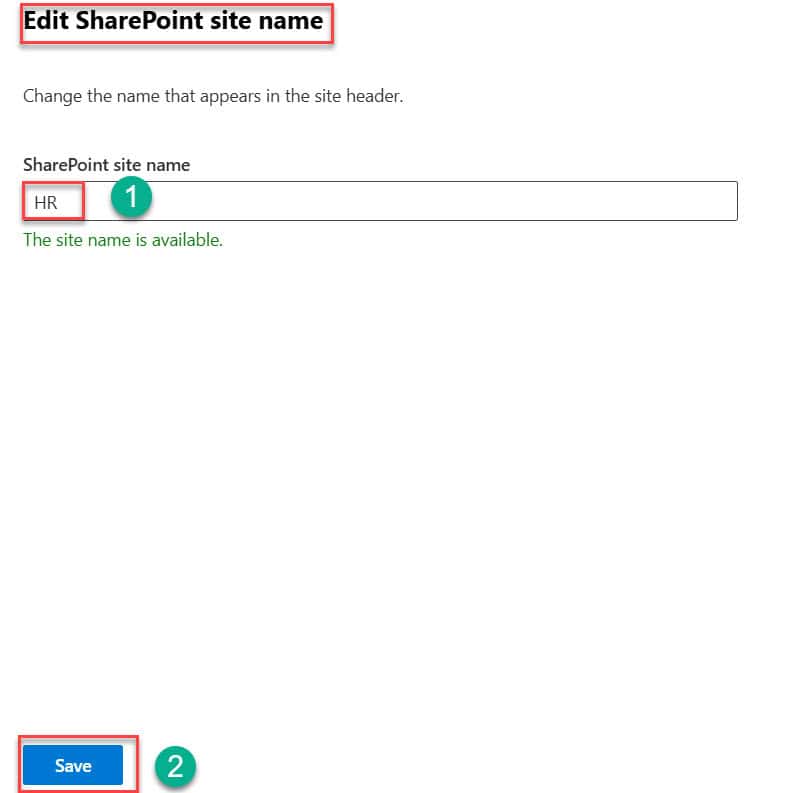
- If you click Yes, it will navigate to the “Edit SharePoint site name” dialog box. Then, under the SharePoint site name, enter the name of your choice. Make sure it is available. Then click on Save.
- Once you click Save, your changes will be applied. After some time, you can see that the Site name and Site URL have changed, as shown in the screenshot below.

I hope you learned how to change the SharePoint site URL and the SharePoint site name. If you need a shorter or updated URL for a SharePoint Online site, then changing the existing URL is the best option. It keeps all your data, permissions, and settings safe while automatically redirecting old links.
Do let me know if you still have any questions in the comments section below.
You may like the following tutorials:
- SharePoint Calculated Column Date Examples
- SharePoint Limits and Boundaries
- Create and Manage Task List in SharePoint
- Export and Import SharePoint Online Site as Template using PowerShell

After working for more than 18 years in Microsoft technologies like SharePoint, Microsoft 365, and Power Platform (Power Apps, Power Automate, and Power BI), I thought will share my SharePoint expertise knowledge with the world. Our audiences are from the United States, Canada, the United Kingdom, Australia, New Zealand, etc. For my expertise knowledge and SharePoint tutorials, Microsoft has been awarded a Microsoft SharePoint MVP (12 times). I have also worked in companies like HP, TCS, KPIT, etc.


Is this something I should do when I have many Power Automate Flows and PowerApps?