
An HR coordinator opens a new leave request, chooses a temporary manager in the Approver combo box, and then changes their mind. If the app keeps that old selection after they cancel or submit the form, the next request can go to the wrong person. I have seen this small issue create real approval delays in otherwise well-built apps.
In a Canvas app for a 200-employee HR team, resetting the Power Apps combo box after submission, cancellation, or a parent-field change keeps forms clean and prevents stale data. The fix is simple once you understand how Reset, ResetForm, and DefaultSelectedItems work together.
This step-by-step guide uses a SharePoint-based Leave Requests app to show the safest ways to reset single-select, multi-select, and people-picker combo boxes.
How to Reset a Power Apps Combo Box
A Power Apps Combo box lets users search and select one or more records. Unlike a standard Dropdown, it supports search, multiple selections, and records with several fields, such as display name, email, department, and job title.
The Reset function sends a control back to its default state:
Reset(cmbApprover)
Here, cmbApprover is the name of the Combo box control. The important detail is that Power Apps resets the control to its DefaultSelectedItems property. It does not always clear the selection.
For example, if cmbApprover.DefaultSelectedItems has a manager record, this formula restores that manager after reset:
Reset(cmbApprover)
If cmbApprover.DefaultSelectedItems is blank, the same formula clears the selection.
That distinction catches many makers. They expect Reset() to always clear a control, but it actually restores the configured default. When you design reset behavior, first decide what “reset” should mean for the user:
- Clear the combo box completely.
- Restore a saved SharePoint value in edit mode.
- Restore the logged-in user’s manager.
- Restore a default choice such as “Pending.”
- Remove a dependent selection after another control changes.
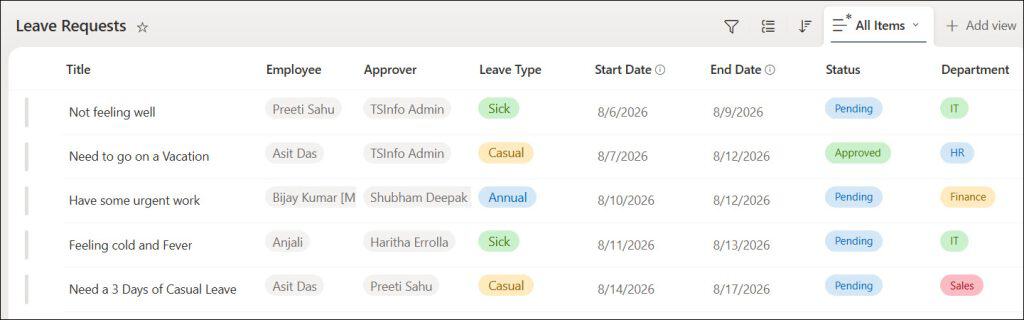
For our HR leave management example, we will use a SharePoint list called Leave Requests with these columns:
| SharePoint column | Type | Example |
|---|---|---|
| Title | Single line of text | Family event |
| Employee | Person or Group | John Smith |
| Approver | Person or Group | Priya Sharma |
| Department | Choice | IT |
| Leave Type | Choice | Annual |
| Start Date | Date only | 18-Aug-2026 |
| End Date | Date only | 21-Aug-2026 |
| Status | Choice | Pending |
| Additional Approvers | Person or Group, multiple | HR and Project Manager |
If you need to prepare the data source first, start with this guide to working with a SharePoint list.
Pro Tip: I always define the desired reset state before I write a formula. “Clear the field” and “restore the default manager” need different
DefaultSelectedItemsformulas, even though both useReset().
Reset Power Apps Combo Box With a Button
The most common requirement is a Clear button beside a Combo box. For example, an HR coordinator may select the wrong approver and want to clear the field without resetting the whole leave request form.
First, insert a Modern Combo box and rename it cmbApprovers. If you use the Office 365 Users connector as a people picker, set the Items property to:
Office365Users.SearchUserV2(
    {
        searchTerm: cmbApprovers.SearchText,
        top: 25,
        isSearchTermRequired: true
    }
).value

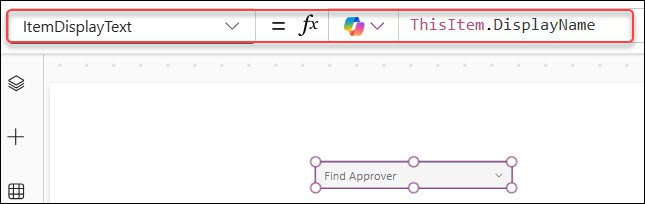
Set the Combo box ItemDisplayText property:
ThisItem.DisplayName
Set the SelectMultiple property:
false
To make the Reset formula clear the selected user, set DefaultSelectedItems to:
Blank()
Now add a Button control, name it btnClearApprover, and set its Text property:
"Clear approver"
Set the button’s OnSelect property:
Reset(cmbApprovers)
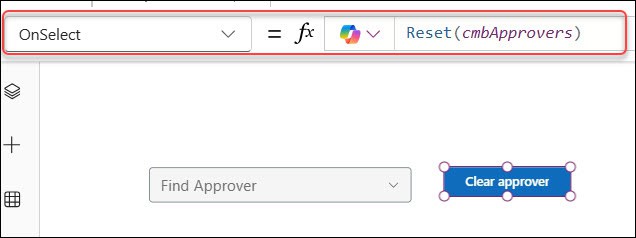
When the user selects the button, Power Apps resets cmbApprover to Blank(). The selected approver disappears, but the rest of the form stays unchanged.
This is the cleanest option when your Combo box sits outside a form. It also works well for standalone filter controls above a Gallery.
If the Combo box sits inside an Edit form, you need to pay closer attention to the form behavior. We will cover that in the next section.
For related people-picker setup, see this guide on creating a Power Apps combo box with Office 365 users.
Reset Power Apps Combo Box Inside a Form
In real client apps, Combo boxes often sit inside a Form control. The Leave Requests app may use an Edit form named frmLeaveRequest to create and edit records from the SharePoint list.
Set the form properties as follows:
DataSource = 'Leave Requests'
For a new leave request, set the Item property:
Defaults('Leave Requests')The form includes an Approver data card containing cmbApprover. After the employee submits or cancels a request, you often want to reset every input in the form.
Use this formula on a Cancel button:
ResetForm(frmLeaveRequest);
NewForm(frmLeaveRequest)
ResetForm(frmLeaveRequest) removes unsaved changes and restores each control to its original value. NewForm(frmLeaveRequest) switches the form back to new-record mode, ready for the next leave request.
For a Submit button, use:
SubmitForm(frmLeaveRequest)
Then put this formula in the form’s OnSuccess property:
Notify(
    "Leave request submitted successfully.",
    NotificationType.Success
);
ResetForm(frmLeaveRequest);
NewForm(frmLeaveRequest)
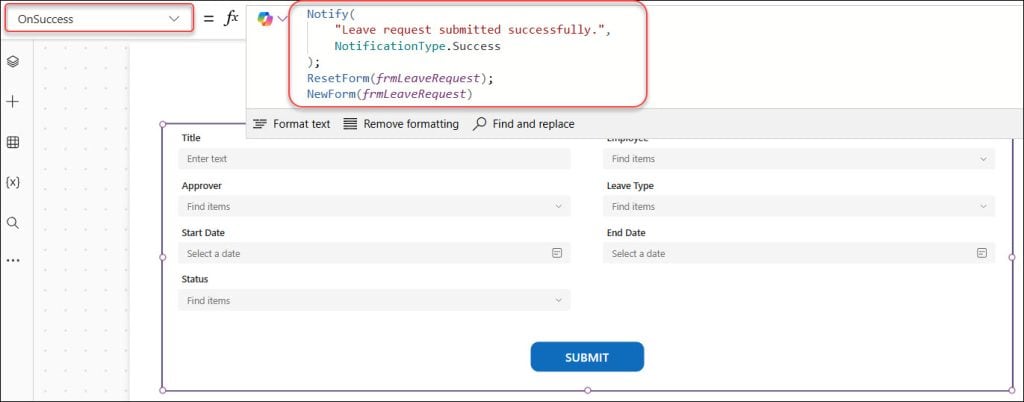
This sequence saves the request first, shows a success message, resets all data cards, and opens a clean new form.
Avoid trying to reset one Combo box inside a form from a button outside the form. Power Apps can block direct control resets across the form boundary. ResetForm() is the more reliable choice when your goal is to clear the entire form.
Pro Tip: In my experience,
ResetForm()after a successful submit prevents more data-entry mistakes than any validation rule. Employees often submit one request and immediately start another, so stale approver or date values cause avoidable errors.
For a full walkthrough of form setup, read how to create a form in Power Apps.
Clear Power Apps Combo Box After SubmitForm
You may want to reset a Combo box after a successful submission while keeping the user on the same screen. This is common for HR coordinators who enter several leave requests in a row.
Use an Edit form named frmLeaveRequest. Add a submit button with this OnSelect formula:
SubmitForm(frmLeaveRequest)
Then use the form’s OnSuccess property:
ResetForm(frmLeaveRequest);
NewForm(frmLeaveRequest);
Reset(cmbApprover);
Reset(cmbAdditionalApprovers)
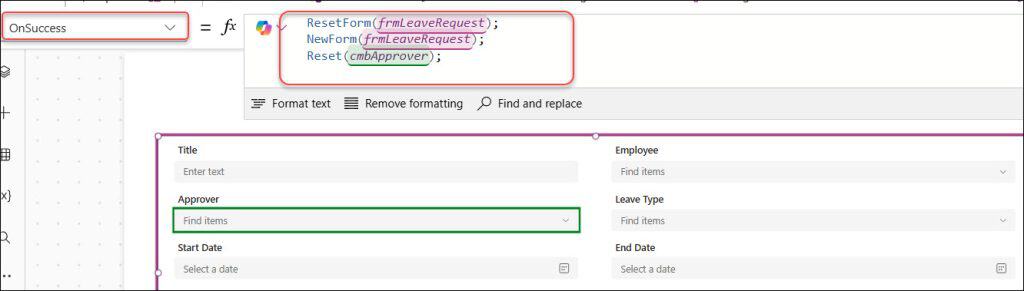
In many cases, ResetForm() and NewForm() already reset the Combo boxes inside the form. The explicit Reset() lines can help when cmbApprover is a custom control with a default driven by variables.
However, do not add these extra lines automatically. First test whether the form reset already gives the correct result. Unnecessary formulas make future troubleshooting harder.
If your form uses a custom Approver card, make sure its Update property converts the selected Office 365 user to a SharePoint Person record:
{
    '@odata.type': "#Microsoft.Azure.Connectors.SharePoint.SPListExpandedUser",
    Claims: "i:0#.f|membership|" & Lower(cmbApprover.Selected.Mail),
    Department: cmbApprover.Selected.Department,
    DisplayName: cmbApprover.Selected.DisplayName,
    Email: cmbApprover.Selected.Mail,
    JobTitle: cmbApprover.Selected.JobTitle,
    Picture: ""
}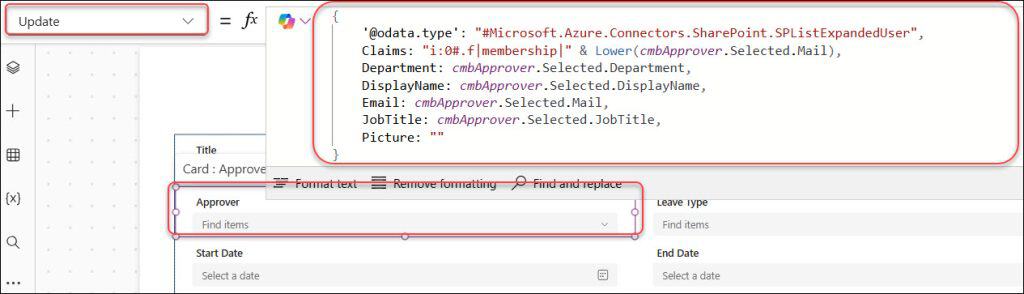
This formula saves the selected person correctly. It does not control whether the Combo box clears. The Combo box’s DefaultSelectedItems, the form mode, and the reset formula control that behavior.
For apps that create records without an Edit form, you can use the Patch function:
Patch(
    'Leave Requests',
    Defaults('Leave Requests'),
    {
        Title: txtReason.Text,
        'Leave Type': cmbLeaveType.Selected,
        'Start Date': dteStart.SelectedDate,
        'End Date': dteEnd.SelectedDate,
        Status: {Value: "Pending"}
    }
);
Reset(txtReason);
Reset(cmbLeaveType);
Reset(dteStart);
Reset(dteEnd)
This creates a new Leave Requests record and resets the controls that collect the values.
If you are new to saving data with formulas, this article on Power Apps CRUD operations gives you a useful foundation.
Reset Power Apps Combo Box to a Default Value
Clearing a Combo box is not always the right experience. In leave management, you may want to reset the Leave Type Combo box back to “Annual” or restore the employee’s direct manager as the default approver.
Reset a SharePoint choice Combo Box in Power Apps
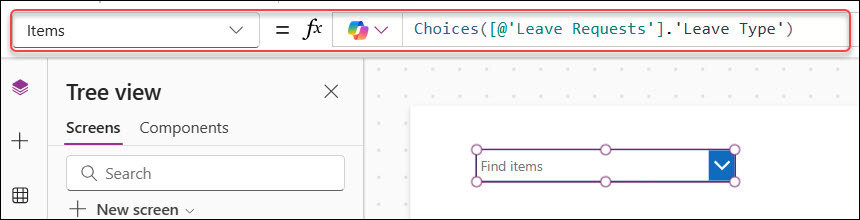
Suppose cmbLeaveType gets its values from the Leave Type SharePoint choice column.
Set its Items property:
Choices([@'Leave Requests'].'Leave Type')
Set DefaultSelectedItems:
Filter(
    Choices([@'Leave Requests'].'Leave Type'),
    Value = "Annual"
)

Now reset it with:
Reset(cmbLeaveType)
The Combo box returns to Annual. The Filter function returns a table, which fits the DefaultSelectedItems property requirement.
Reset an Office 365 user Combo Box to the manager
For cmbApprover, first set a variable in the screen’s OnVisible property:
Set(
    varCurrentManager,
    Office365Users.ManagerV2(User().Email)
)

Then set DefaultSelectedItems on cmbApprover:
If(
    !IsBlank(varCurrentManager),
    Table(
        {
            DisplayName: varCurrentManager.displayName,
            Mail: varCurrentManager.mail,
            Department: varCurrentManager.department,
            JobTitle: varCurrentManager.jobTitle
        }
    )
)
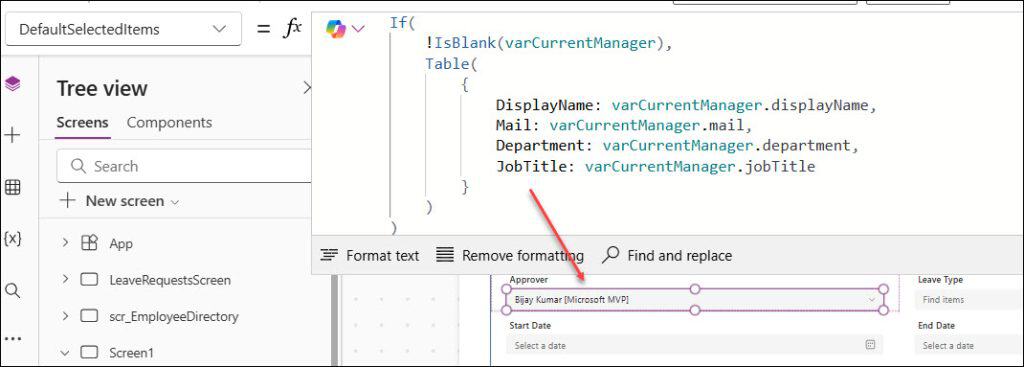
Now this formula restores the employee’s manager:
Reset(cmbApprover)
The Table() function is important. DefaultSelectedItems expects a table of records, even for a single-select Combo box.
Make sure the record structure matches the Combo box’s Items source. For Office 365 Users search results, use the same property names returned by the connector, such as displayName, mail, and userPrincipalName.
Pro Tip: I test the default manager pattern with users who have no manager listed in Microsoft 365. New hires, contractors, and service accounts can return blank manager details, so always protect the formula with
If(!IsBlank(...)).
Reset Dependent Combo Boxes
A dependent or cascading Combo box shows values based on another selection. For example, the HR leave form may let an employee choose a Department first and then select an approver from that department.
Imagine these controls:
cmbDepartmentfor DepartmentcmbApproverfor ApprovercmbBackupApproverfor Backup Approver
When a user changes the Department, the old approver may no longer belong to that department. You should clear the dependent Combo boxes immediately.
Set the OnChange property of cmbDepartment:
Reset(cmbApprover);
Reset(cmbBackupApprover)
Then filter the Approver Combo box Items property:
Filter(
    Office365Users.SearchUserV2(
        {
            searchTerm: cmbApprover.SearchText,
            top: 50,
            isSearchTermRequired: true
        }
    ).value,
    department = cmbDepartment.Selected.Value
)
This formula searches Microsoft 365 users and then returns users from the selected department only.
If your organization does not maintain Department information in Microsoft 365 consistently, use a separate SharePoint employee directory instead. A dedicated list with Employee, Email, Department, and Active columns gives you better control.
For a detailed walkthrough, see how to build a Power Apps cascading dropdown control.
Reset Multiple Combo Boxes at Once
A Leave Requests screen may contain multiple filters above a Gallery:
cmbDepartmentFiltercmbLeaveTypeFiltercmbStatusFiltercmbEmployeeFilter
Users need a one-click way to remove every filter and return to the complete request list.
Add an icon or button called btnClearFilters. Set its OnSelect property:
Reset(cmbDepartmentFilter);
Reset(cmbLeaveTypeFilter);
Reset(cmbStatusFilter);
Reset(cmbEmployeeFilter)
If these Combo boxes have blank DefaultSelectedItems, the formula clears all selections.
Now set the Gallery’s Items property to handle blank selections:
Filter(
    'Leave Requests',
    IsBlank(cmbDepartmentFilter.Selected.Value) ||
    Department.Value = cmbDepartmentFilter.Selected.Value,

    IsBlank(cmbLeaveTypeFilter.Selected.Value) ||
    'Leave Type'.Value = cmbLeaveTypeFilter.Selected.Value,

    IsBlank(cmbStatusFilter.Selected.Value) ||
    Status.Value = cmbStatusFilter.Selected.Value
)
This filter shows every record when the Combo boxes are blank. When users choose values, Power Apps applies each selection as a filter.
For a people-picker filter, use a formula like this:
Filter(
    'Leave Requests',
    IsBlank(cmbEmployeeFilter.Selected.Mail) ||
    Employee.Email = cmbEmployeeFilter.Selected.Mail
)
This pattern gives managers a clean approval dashboard. They can filter for pending IT requests, inspect the results, and then clear everything with one click.
If you use a Gallery for your requests, this article on filtering a Power Apps gallery with a radio button offers another useful filter approach.
Use the Reset Property With a Variable
The Reset property is another way to reset a Combo box. It expects a true-or-false expression. Power Apps resets the control when the value changes.
This option is helpful when one action needs to reset several controls, or when direct calls to Reset() create scope issues in complex layouts.
Create a context variable on the Clear Filters button:
UpdateContext(
    {
        locResetFilters: !locResetFilters
    }
)
Set the Reset property of each filter Combo box:
locResetFilters
When the user selects the Clear Filters button, Power Apps switches locResetFilters between true and false. Each time it changes, the Combo boxes reset to their defaults.
You can use this pattern for controls in a custom component as well. The variable gives you a single reset signal instead of a long list of individual Reset calls.
Do not set the Reset property permanently to true. Power Apps needs a change from false to true, or true to false, to trigger another reset. A toggle variable works because it changes every time the user selects the button.
Pro Tip: I use the variable-driven Reset property for shared components and complex filter panels. For a single Combo box on one screen,
Reset(cmbApprover)is shorter and easier for another maker to understand.
Handle Edit Mode Without Losing Values
Reset behavior becomes more complicated when users edit an existing leave request. In edit mode, the Approver Combo box should show the saved SharePoint person. In new mode, it should start blank or use the default manager.
Set the Combo box DefaultSelectedItems property to:
If(
    frmLeaveRequest.Mode = FormMode.Edit,
    Parent.Default,
    Blank()
)
Parent.Default returns the saved value from the SharePoint Approver column. The formula ensures that edit mode shows the existing approver and new mode starts empty.
If you use the manager as the new-record default, use:
If(
    frmLeaveRequest.Mode = FormMode.Edit,
    Parent.Default,
    If(
        !IsBlank(varManager),
        Table(
            {
                displayName: varManager.displayName,
                mail: varManager.mail,
                department: varManager.department,
                jobTitle: varManager.jobTitle,
                userPrincipalName: varManager.userPrincipalName
            }
        )
    )
)
Now Reset(cmbApprover) has the correct behavior in both modes:
- In edit mode, it restores the saved Approver.
- In new mode, it restores the employee’s manager.
- When no manager exists, it stays blank.
This is one of the most reliable patterns for a production HR app.
Important Considerations
- Reset returns to defaults: The
Reset()function restores DefaultSelectedItems. Set that property toBlank()only when you want the Combo box to clear. - Forms need ResetForm: Use
ResetForm(frmLeaveRequest)to reset controls inside an Edit form. It handles the whole form more reliably than resetting individual controls from outside it. - Match record schemas: The records in DefaultSelectedItems must use the same field structure as the Combo box Items source. This matters most with Office 365 Users and SharePoint Person columns.
- Reset dependent fields: Clear child Combo boxes when a parent Department or Location selection changes. Otherwise, users can submit invalid combinations.
- Preserve edit values: Use
Parent.Defaultwhen the form runs in edit mode. Without it, a reset can remove the saved selection from the screen. - Keep data secure: Resetting controls changes the user interface only. Apply SharePoint list permissions to protect confidential employee and leave records.
Frequently Asked Questions
How do I reset a Combo box in Power Apps?
Use the Reset() function with the Combo box name, such as Reset(cmbApprover). Power Apps returns the control to the values specified in DefaultSelectedItems. Set that property to Blank() if you want the selection to clear.
Why does Reset not clear my Power Apps Combo box?
Your DefaultSelectedItems property probably contains a default record. Reset() restores that value instead of clearing the control. Change DefaultSelectedItems to Blank() or use a conditional formula that returns blank in the required situation.
How do I clear a Combo box after submitting a form?
Use SubmitForm(frmLeaveRequest) on the Submit button. Then use ResetForm(frmLeaveRequest); NewForm(frmLeaveRequest) in the form’s OnSuccess property. This clears the form and prepares it for a new SharePoint record.
How do I reset multiple Combo boxes at once?
Add Reset() for each control in one button’s OnSelect formula. For example, use Reset(cmbDepartment); Reset(cmbStatus); Reset(cmbApprover). You can also toggle a context variable and connect each control’s Reset property to that variable.
Can I reset a Combo box to a default SharePoint choice?
Yes. Set DefaultSelectedItems to a filtered choice record, such as Filter(Choices([@'Leave Requests'].'Leave Type'), Value = "Annual"). Then call Reset(cmbLeaveType) to restore Annual.
How do I reset an Office 365 Users Combo box?
Set the Combo box DefaultSelectedItems property to Blank() to clear it, or create a table that matches Office 365 Users search results to restore a default person. Then call Reset(cmbApprover) from a button, OnChange formula, or form reset action.
You may also like:
- Power Apps Reset function with controls
- Set a button to disabled in Power Apps
- Power Apps IsBlank function
- Add role-based logic with Power Apps nested If statements
- Create a multi-tab form in Power Apps
You now know how to reset a Power Apps combo box with a button, a form action, default values, and cascading controls. Start by defining the exact default state you need, then use Reset() for individual controls and ResetForm() for full SharePoint forms. I hope you found this article helpful.

After working for more than 18 years in Microsoft technologies like SharePoint, Microsoft 365, and Power Platform (Power Apps, Power Automate, and Power BI), I thought will share my SharePoint expertise knowledge with the world. Our audiences are from the United States, Canada, the United Kingdom, Australia, New Zealand, etc. For my expertise knowledge and SharePoint tutorials, Microsoft has been awarded a Microsoft SharePoint MVP (12 times). I have also worked in companies like HP, TCS, KPIT, etc.


Hi Sir,
Thanks for this explanation.
I want to clear(make it an empty selection) a combo box – even if it has default selected items property in use. And it must not affect the entire gallery items. Can you please give me a quick solution?
Thanks in advance
Can you clear the selected item in the combo box from an icon in a gallery?